A Guided Practice for Anxiety and Dystonia: Finding Ground, Warmth, and Self-Compassion | Hope for Dystonia
Feb 26, 2026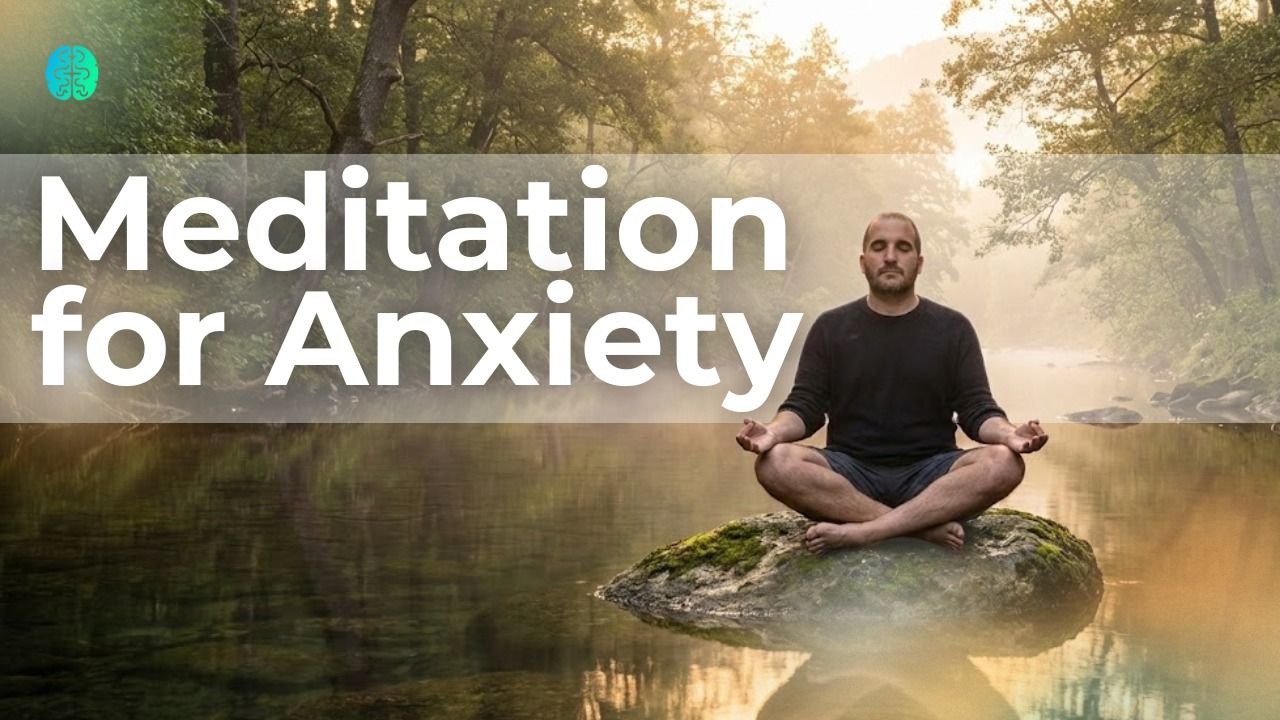
This article is based on a video originally published on the Hope for Dystonia YouTube channel.
Anxiety and dystonia are two different expressions of the same phenomenon.
Both reflect a nervous system that has experienced wounding and learned that staying safe requires remaining in a state of vigilance—chronically dysregulated, always on alert, never quite able to relax into ease.
This guided practice is designed for those moments when anxiety is present and intense. It's not about forcing calm or performing relaxation. It's about allowing yourself to be held—by the ground beneath you, by the warmth of your own caring attention, and ultimately by a love that is larger than any of us.
The practice moves through three essential elements:
- Grounding — Finding stability in the earth below
- Loving curiosity — Wrapping yourself in compassionate attention
- Resting in love — Allowing something larger to hold you
Listen to the Guided Practice
Guided Meditation for Anxiety & Dystonia: Grounding, Self-Compassion, and Nervous System Regulation
Understanding the Anxiety-Dystonia Connection
Before we enter the practice itself, it's worth understanding why anxiety and dystonia so often travel together.
The Same Root, Different Expressions
Both anxiety and dystonia emerge from a nervous system that has learned vigilance as a survival strategy.
Anxiety expresses through:
- Racing thoughts and worry loops
- Hypervigilance to potential threats
- Difficulty settling or relaxing
- Sympathetic nervous system activation
Dystonia expresses through:
- Chronic muscle tension and spasming
- Involuntary movements or postures
- Patterns of bracing and guarding
- Physical manifestation of nervous system dysregulation
They share a common source: a nervous system that believes it must remain on high alert to stay safe.
Why Practices Like This Help
When we provide the nervous system with experiences of genuine safety and holding, something shifts.
We're not fighting the anxiety or forcing the dystonia to release. We're creating conditions where the nervous system can discover that relaxation might be safe—that vigilance isn't always necessary.
This is the work of nervous system retraining: not white-knuckling through symptoms, but offering your system something new to organize around.
The Practice: A Written Guide
The following is a written version of the guided practice. You can read through it to understand the approach, then use the video for the actual guided experience.
Part One: Finding Ground
Before closing your eyes:
Scan the environment around you. Find what feels familiar, known, and reassuring.
Take a couple of deep breaths—in and out of the belly.
Notice what it's like when you take in the safety that exists around you.
With eyes closed:
Allow yourself to really let go into the ground underneath you.
Let your body become nice and heavy. Allow it to be held by the ground.
Notice the anxious thoughts that might be swirling through your mind. Allow them to be held as well by the stability of the ground beneath you.
Imagine the anxious thoughts as snowflakes falling toward warm ground. The ground is warm. The snowflakes can gently melt.
You're not trying to suppress the anxious thoughts. You're just allowing them to be met by the stability of the ground underneath.
Notice any tension, any dystonic spasms, any parts of the body working hard to keep you safe.
You don't have to force anything there. Just notice what happens when those parts of the body come into relationship with the stability of the ground beneath you.
What is it like for those specific parts to be held?
Remember: You don't have to make anything happen. You don't have to perform calmness or relaxation.
You just have to allow the body and mind to be met by the stability of the ground.
Allow your jaw, your neck, your diaphragm, and your pelvic floor to be held by the ground underneath.
Any limb or any part of the body that needs to feel that holding—just allow it to feel heavy, to come down.
Part Two: Loving Curiosity
From this place of holding:
Come into your heart.
Imagine a beloved being of your choice—someone for whom you have uncomplicated feelings of love and care. Someone whose happiness is important to you.
This could be a person, a puppy, a spiritual figure. Choose something easy.
Imagine this being is right in front of you, and you are holding them closely.
You are holding them with care.
You are attentive to what they express with their face, to what they say, to how they move.
You deeply, deeply care. And so you are lovingly curious.
This is not intellectual curiosity that lives in the head. This is felt, loving curiosity that lives in the heart. Caring curiosity.
Imagine that with this loving, caring curiosity, you are wrapping your beloved being in a blanket of care and attentiveness—warmth that expands from the heart outward.
Now come back to your own body.
Begin wrapping that same blanket of loving, attentive, caring curiosity around yourself.
You don't have to fix anything happening in the body. You don't have to rush to understand.
Just notice what happens when you make this commitment to be there for yourself.
Wrap the blanket of care around your body, so that the parts that may have felt dysregulated, that may have been asking for attention, that may still need care—allow those parts to feel held. Lovingly. With care.
"Yes, I hear you. I am right here. And I am listening."
Part Three: Holding the Whole Loop
Notice how sensations in the body come with emotions.
Sometimes it's the anxiety we've been discussing. Sometimes it's a broader kind of fear.
Sometimes there are thoughts that accompany this—thoughts saying you need to stay on high alert, that you should be worrying about this or that.
Allow yourself to hold the whole stack, the whole loop:
- Bodily sensations
- Emotions
- Thoughts
Holding the whole loop with care, with love, with presence.
Notice what happens when you hold the anxiety, the fear, the stories with loving curiosity and attention.
You're not becoming fused with the stories. You're not believing your thoughts.
You are holding your experience with care.
How does the body respond?
How does the loop shift, if at all?
How does the experience change when you know that you are there for yourself—that you are listening?
Part Four: Finding What's Really Needed
Give space for all of this to show you what's really needed.
In what specific ways does the fear, the tension, the anxiety need to be held?
If there was one thing this scared part of you needed to hear from you right now, what would it be?
Not something magical like "Make it all okay right now" or "Promise that things will work out the way I want."
But something this scared part can actually trust.
Is it that you'll be there for that scared part?
That you'll continue to listen?
That whatever comes, you are there for yourself?
Is it that you are good? That you are good whatever you accomplish or don't accomplish?
Is it that you are safe to be who you are?
Find what exactly this scared part of you needs to hear. Take the time you need. Really convey it from the heart.
Part Five: Resting in Love
If it feels okay, recognize something:
When you are speaking from the heart, you are not fused with the thoughts, the emotions, the sense of self as much.
You are in fact tapping into something much larger.
There is a love that is always loving us. You're just giving voice to it.
If this makes sense to you, take a moment to rest in this broader love—the love of what is, the love of God if you will.
Take a moment to feel what it's like to rest in that love.
Even if the tension and the thoughts and the fear come in and out or continue to evolve—even if there's something that isn't quite trusting that you can relax—even if that is present:
Notice what it's like to rest in that love that is bigger than all of us.
Part Six: Making It Familiar
If you do find greater trust—if you notice that the body and psyche respond to this holding:
Make yourself very familiar with what it feels like to be more regulated.
This is a new way of being you.
With practice, it will become your new normal.
With practice, this state will become a trait.
Take one more moment to familiarize yourself with:
- This love that is holding you
- What things feel like in the body when you are grounded in it
Keep track of this.
In your own time, open your eyes and scan your environment once more.
Feel that love and the body's response.
What is it like to be you, eyes open, when that love is front and center?
Key Principles From This Practice
1. You Don't Have to Perform Relaxation
One of the most important aspects of this practice: you're not forcing anything.
You don't have to make yourself calm. You don't have to pretend the anxiety isn't there. You don't have to achieve some particular state.
You just have to allow yourself to be met.
By the ground. By your own caring attention. By love.
2. The Ground Is Always There
The stability of the earth beneath you is constant. It's not going anywhere. It can hold you, hold your thoughts, hold your tension.
This isn't metaphor—it's physiology.
When you feel supported underneath, your nervous system receives signals of safety. The vestibular system registers stability. The body can begin to release the vigilance it's been maintaining.
3. Loving Curiosity Is Different From Trying to Fix
When you wrap yourself in caring curiosity, you're not rushing to make symptoms disappear.
You're saying: "I'm interested in you. I care about what you're experiencing. I'm here to listen."
This is the quality of attention that allows parts of us to feel safe enough to shift.
Forced attention creates more tension. Loving attention creates conditions for release.
4. Holding the Whole Loop
Anxiety, dystonia, and protective patterns don't exist in isolation. They come with:
- Bodily sensations
- Emotions
- Thoughts and stories
When you can hold the entire loop—not fighting any part of it, not believing the stories, just holding with care—something shifts.
The loop doesn't have the same grip when it's being observed with love rather than experienced from inside.
5. Finding What's Actually Needed
The scared parts of us need specific things. Not magic. Not promises. But real, trustworthy messages:
- "I'm here for you."
- "I'll keep listening."
- "You're good, whatever happens."
- "It's safe to be who you are."
Finding what's specifically needed and offering it from the heart is reparenting in action.
6. States Become Traits
Perhaps the most hopeful principle:
With practice, regulated states become stable traits.
What feels new and effortful now—this sense of being held, this grounded love—can become your new normal.
The nervous system learns from repeated experience. Each time you practice, you're teaching your system that this way of being is possible and safe.
When to Use This Practice
This guided practice is designed for moments when anxiety is present and you need support. Consider using it:
When anxiety is acute: During anxiety episodes, panic-adjacent states, or when worry loops are spinning
When dystonic symptoms are flaring: When tension and spasming are intense and you need to create conditions for release
As a daily practice: Regular engagement deepens the pathways, making regulated states more accessible
Before sleep: When racing thoughts or body tension make it difficult to settle
After stressful experiences: To help your nervous system return to baseline after activation
The Relationship Between Anxiety and Dystonia Recovery
Understanding that anxiety and dystonia share common roots has profound implications for recovery.
Working With Both Together
When you address the underlying nervous system dysregulation, you often find that both anxiety and dystonia symptoms respond.
This is why the Hope for Dystonia method includes:
- Nervous system regulation practices (like this one)
- Embodied attachment integration
- Working with the emotional roots of physical patterns
- Self-compassion and reparenting work
The Role of Self-Compassion
The core of this practice—wrapping yourself in loving curiosity—is self-compassion in action.
Research shows that self-compassion practices directly affect nervous system regulation. When we meet ourselves with kindness rather than criticism, our systems shift from threat response to connection response.
For people with dystonia and anxiety, this shift is foundational.
States to Traits: The Neuroplasticity of Healing
Every time you practice being held, being loved, being regulated, you're engaging neuroplasticity.
You're teaching your nervous system that there's an alternative to chronic vigilance. You're creating new neural pathways that support ease rather than tension.
Over time, with consistent practice, what feels like an effortful state becomes an automatic trait.
Your Next Step: The Recovery Roadmap
If this practice resonated with you—if you recognize that your dystonia and anxiety share common roots in nervous system dysregulation—we invite you to download the Hope for Dystonia Recovery Roadmap.
This free resource provides:
- Understanding of the comprehensive framework for recovery
- How practices like this one fit into the larger healing journey
- The eight steps that guide nervous system retraining
- Introduction to the Self-Healers Academy
- Tools for beginning to map your own patterns
Download Your Free Recovery Roadmap →
The Roadmap will help you understand how emotional and physical healing work together, and how consistent practice can transform anxious, dystonic states into regulated, easeful traits.
Final Thoughts: You Are Already Held
There is a love that is always loving us.
When you speak from the heart to the scared parts of yourself, you're not manufacturing something that wasn't there. You're giving voice to something that already exists.
The ground beneath you is stable. The warmth of your own caring attention is available. Love—larger than any of us—is present.
Your work is not to create these things. Your work is to allow yourself to receive them.
With practice, with patience, with the gentle commitment to keep showing up for yourself, what feels effortful now will become natural.
The anxious thoughts will still arise. The dystonic patterns will still emerge from time to time. But you'll have something to meet them with: ground, warmth, and the loving curiosity that allows everything to soften.
This is the path from state to trait. From dysregulation to ease. From vigilance to trust.
You are already held. The practice is simply remembering.
Ready to explore how this practice fits into comprehensive dystonia recovery? Download the free Hope for Dystonia Recovery Roadmap and discover the framework that supports lasting transformation.