Dystonia and Neurodivergence: Understanding the Overlap and Finding Sovereignty
Jan 15, 2026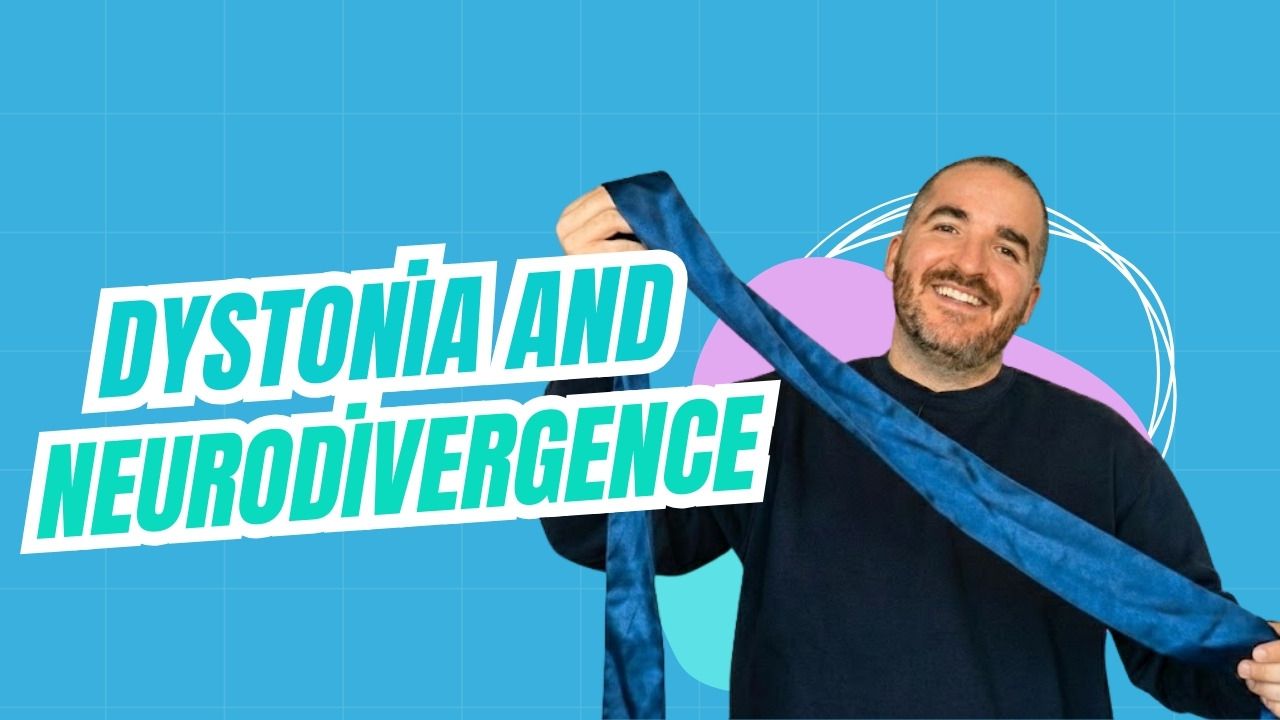
This article is based on a video originally published on the Hope for Dystonia YouTube channel.
If you're highly sensitive, if social situations leave you exhausted even when you're not doing much, if you recognize patterns that others miss, if sensory input sometimes feels overwhelming—you may be neurodivergent.
And if you have dystonia, understanding this aspect of yourself could be life-changing.
There's a significant overlap between dystonia and neurodivergence that's rarely discussed. Many people with dystonia don't realize they fall under the broad umbrella of neurodivergence—or if they do, they've been shamed into hiding it.
This article is about recognizing that overlap, understanding what it means, and discovering the key to working with it: sovereignty.
Sovereignty in regulating sensory input. Sovereignty in setting boundaries. Sovereignty in choosing what you take in and what you protect yourself from.
You're not broken. You're not too much. You're uniquely wired—and that wiring deserves to be honored, not hidden.
Watch the Full Video
Dystonia and Neurodivergence: When a Sensitive Brain Learns Too Well―
What Is Neurodivergence?
Neurodivergence simply means your brain has a unique configuration—certain areas developed more than you'd expect in the general population, while other areas might need extra support.
It's not a deficit. It's difference.
The Neurodivergent Umbrella
Neurodivergence includes (but isn't limited to):
- Autism spectrum traits
- ADHD characteristics
- Highly Sensitive Person (HSP) traits
- Sensory processing differences
- Pattern recognition and systemic thinking
- Giftedness or exceptional abilities in specific areas
These aren't discrete categories with rigid boundaries. They're overlapping patterns that describe how some brains process information, sensation, and emotion differently from the statistical norm.
Common Neurodivergent Characteristics
You might be neurodivergent if you:
Experience heightened sensitivity:
- Social situations drain you quickly, even when pleasant
- Noise, crowds, or busy environments overwhelm you
- You feel things more intensely than others seem to
- Sensory input (textures, sounds, lights) affects you strongly
Recognize patterns easily:
- You see connections others miss
- You understand systems and dynamics intuitively
- You have insights or brilliance not always matched by others
- Complex concepts make sense to you quickly
Are highly intelligent and adaptable:
- You learn rapidly when interested
- You adapt quickly to new information or situations
- Your brain processes information in unique ways
- You think differently—and that's often an asset
Feel open to emotional and sensory input:
- You sense the emotional atmosphere when entering a room
- Others' moods affect you strongly
- You pick up on subtle cues and unspoken dynamics
- You feel porous or vulnerable to external input at times
If several of these resonate, neurodivergence may be part of how your brain is wired.
The Overlap Between Dystonia and Neurodivergence
Over years of working with clients, a clear pattern has emerged: there's significant overlap between dystonia and neurodivergence, at least for a substantial subset of people with dystonia.
Why This Connection Exists
The very traits that characterize neurodivergent brains create both gifts and vulnerabilities:
The Gift: Rapid Learning and Adaptation
A neurodivergent brain that is:
- Highly intelligent
- Extremely adaptable
- Very sensitive and open to stimulus
- Capable of recognizing and learning patterns quickly
...can be an extraordinary asset in the right conditions.
The Vulnerability: Maladaptive Neuroplasticity
But that same rapid learning becomes a liability when exposed to:
- Developmental trauma
- Anatomical imbalances (like jaw asymmetry)
- Chronic stress or dysregulation
- Other conditions that predispose to dystonia
The neurodivergent brain learns dysfunctional protective patterns just as quickly—and just as thoroughly—as it learns functional ones.
The Intelligence That Cuts Both Ways
Your neurodivergent brain's adaptability means:
When conditions are healthy: You thrive, learn rapidly, contribute uniquely
When conditions are harmful: You encode maladaptive patterns deeply, and they become entrenched quickly
This is why neurodivergent people with dystonia often describe their symptoms as particularly severe or intractable—not because something is more "wrong" with them, but because their nervous systems learned the protective patterns so thoroughly.
The Same Capacity That Creates the Problem Creates the Solution
Here's the hopeful truth: the same neuroplasticity that allowed you to learn dystonia patterns so effectively can allow you to relearn functional patterns just as effectively.
Your neurodivergent brain isn't a liability in recovery. When given the right conditions and inputs, it becomes an asset—capable of rapid relearning once it feels safe enough to release the old patterns.
Understanding Sensory Processing in Neurodivergence
A core aspect of neurodivergence—and one particularly relevant to dystonia—is how you process sensory information.
The Dual Pattern: Overwhelm and Seeking
Many neurodivergent people experience what seems like a contradiction:
Sometimes: Sensory Overwhelm
- Too much noise, too many people, too much input
- Feeling invaded by sensory information
- Needing to retreat, tune out, shut down
- Exhaustion from sensory processing
Sometimes: Sensory Seeking
- Needing specific sensory input to feel regulated
- Craving particular textures, sounds, movements
- Feeling disconnected without enough sensory stimulation
- Using specific stimuli to self-soothe
This isn't actually a contradiction. It's about needing sovereignty over which sensory inputs you receive and when.
What Is Stimming?
Stimming (self-stimulatory behavior) is a way neurodivergent nervous systems regulate through specific sensory input.
Common forms include:
Tactile stimming:
- Rubbing specific textures (satin, velvet, specific fabrics)
- Fidgeting with objects
- Running fingers over surfaces repeatedly
Movement stimming:
- Rocking, swaying, or rhythmic movements
- Hand flapping or finger movements
- Pacing or repetitive motion
Auditory stimming:
- Humming, making sounds, vocal play
- Listening to the same song repeatedly
- Echolalia (repeating words or phrases)
Visual stimming:
- Watching repetitive visual patterns
- Looking at specific colors or lights
- Tracking moving objects
The Function of Stimming
Stimming serves critical functions:
Regulation: Helps the nervous system find balance and calm
Grounding: Provides proprioceptive feedback about body boundaries
Soothing: Offers predictable, controllable sensory experience
Processing: Helps make sense of overwhelming input or emotions
Expression: Communicates internal states when words aren't accessible
Stimming isn't something to suppress or be ashamed of. It's your nervous system's intelligent attempt to regulate itself.
Unmasking: The Power of Not Hiding
For most of their lives, neurodivergent people learn to mask—to hide neurodivergent traits to appear "normal" and avoid judgment, shame, or rejection.
The Cost of Masking
Masking requires:
- Constant vigilance and self-monitoring
- Enormous energy expenditure
- Suppression of natural regulatory behaviors
- Chronic stress from pretending to be someone you're not
- Disconnection from your authentic self
For people with dystonia, masking often makes symptoms worse.
When you suppress natural regulatory behaviors like stimming, you:
- Lose access to tools that help your nervous system balance
- Create additional tension from the effort of suppression
- Increase overall nervous system dysregulation
- Reinforce the message that you're not acceptable as you are
The Freedom of Unmasking
Unmasking means allowing your neurodivergent traits to be visible—recognizing them as valid, normal variations rather than shameful secrets.
Unmasking involves:
Normalizing: "This is a thing. This is how some nervous systems work. There's nothing wrong with this."
Permission: Allowing yourself to stim, to seek specific sensory input, to honor your needs
Boundary-Setting: Choosing environments and relationships that respect your neurodivergence
Self-Acceptance: Embracing how you're wired rather than trying to be neurotypical
For dystonia recovery, unmasking is often essential. When you can use the regulatory tools your nervous system naturally seeks, symptoms often improve.
A Personal Example: The Satin Strip
Understanding stimming and unmasking becomes more concrete through example.
A Lifetime Pattern
Since childhood, there's been a particular form of stimming that provides profound regulation: rubbing a strip of satin fabric between fingers in a specific, repetitive motion.
For years, this was a source of shame—something to hide, something that invited scolding and judgment from adults who didn't understand.
The Function It Serves
This particular stim provides:
Specific tactile input that the nervous system finds soothing
Predictable, controllable sensation in contrast to overwhelming external input
Grounding in the body through focused proprioceptive feedback
Nervous system regulation that can last for hours
Often combined with:
- Earplugs to reduce auditory overwhelm
- An eye mask to eliminate visual stimulation
- Extended time (sometimes hours) to fully regulate
Why Sharing Matters
Sharing this personal example serves two purposes:
- Demonstrating What Stimming Looks Like
Giving concrete understanding of how specific, repetitive sensory input serves nervous system regulation
- Normalizing Through Unmasking
When someone in a position of teaching or authority unmasks, it gives others permission to do the same
This isn't embarrassing. This isn't shameful. This is how some nervous systems regulate—and that's completely valid.
Practical Tools for Sensory Regulation
If you're neurodivergent and have dystonia, understanding how to work with your sensory processing can be transformative.
Finding Your Textures
Many people discover that specific textures provide profound regulation:
Common soothing textures:
- Satin or silk fabric
- Velvet or soft fleece
- Specific blankets from childhood
- Particular clothing items
- Favorite stuffed animals or comfort objects
The practice: Identify which textures genuinely soothe you, then carry a small piece of that fabric with you—in your pocket, purse, or bag.
When you need regulation:
- At work during stressful moments
- In social situations that feel overwhelming
- During sensory overload
- When dystonia symptoms intensify
Simply having that texture available and taking a moment to stim with it can make an enormous difference in your nervous system state—and consequently, in your symptoms.
Weighted Blankets: Deep Pressure Input
Weighted blankets are particularly helpful for people with dystonia, especially those who are neurodivergent.
Why weighted blankets work:
Proprioceptive Input: The pressure helps your nervous system feel the boundaries of your body more clearly
Feeling Held: Deep pressure mimics the sensation of being embraced, which can be profoundly regulating
Grounding: Helps you feel more "in" your body rather than dissociated or fragmented
Calming the Nervous System: Deep pressure activates parasympathetic responses, moving you toward rest and recovery states
For neurodivergent people with dystonia, this proprioceptive clarity is especially valuable—it addresses both the sensory processing differences and the dystonia-related disconnection from body boundaries.
Echolalia: Vocal Stimming and Play
Echolalia is the pattern of repeating words, phrases, or sounds that you hear. It's common in neurodivergence and often misunderstood or shamed.
Forms of echolalia:
Immediate echolalia: Repeating something right after hearing it
Delayed echolalia: Repeating phrases from TV shows, movies, or past conversations
Generative echolalia: Playing with sounds, words, tones—exploring vocal possibilities in unconventional ways
Functions echolalia serves:
Soothing: The repetition itself can be calming and regulating
Processing: Repeating helps make sense of information or experiences
Embodiment: Feeling your vocal cords, your voice, your capacity to produce sound
Connection: Relating to the environment through sound play
Self-Expression: Communicating internal states in non-neurotypical ways
Giving Yourself Permission
If vocal play, sound exploration, or echoing phrases feels natural to you—especially when alone or in safe spaces—consider giving yourself permission to engage with it.
This might look like:
- Playing with silly sounds or words with pets
- Exploring different tones of voice
- Repeating phrases that feel satisfying
- Singing, chanting, or humming
- Making unconventional sounds that soothe you
There's nothing wrong with this. It's another form of stimming—using auditory and vocal sensory input to regulate your nervous system.
Tuning Out When Needed
Just as important as finding regulating inputs is learning to reduce overwhelming inputs when needed.
Tools for tuning out:
Earplugs or noise-canceling headphones When auditory input becomes too much
Eye masks or sunglasses When visual stimulation overwhelms
Quiet, dim spaces Creating environments with less sensory demand
Minimizing social obligations Recognizing when you need solitude to recover
Saying no to overwhelming situations Protecting your nervous system's capacity
This isn't antisocial or avoidant. It's sovereignty—choosing the sensory environment your nervous system can handle.
Sovereignty: The Key to Working With Neurodivergence and Dystonia
If there's one word that captures what neurodivergent people with dystonia need to thrive, it's sovereignty.
What Sovereignty Means
Sovereignty is:
The right to regulate your own sensory input Choosing what you take in and what you filter out
Control over your boundaries Physical, emotional, psychic—protecting what's yours
Permission to honor your needs Even when they're different from others' needs
Authority over your own nervous system Making choices based on what actually helps you regulate, not what you "should" do
Freedom to be yourself Unmasking without shame or apology
Why Sovereignty Matters for Dystonia
Without sovereignty, you're constantly at the mercy of:
- External demands that overwhelm your system
- Sensory environments you can't control
- Others' moods and emotions that flood you
- Expectations that require suppressing your natural regulatory behaviors
This state of powerlessness and overwhelm perpetuates dystonia.
With sovereignty, you can:
- Choose sensory inputs that support regulation
- Set boundaries that protect your nervous system
- Use stimming and other tools without shame
- Create conditions where your symptoms can soften
Sovereignty allows your nervous system to exhale—and in that exhaling, dystonia patterns can release.
Sovereignty in Sensory Regulation
This means:
Actively choosing what sensory input to engage with
Tuning out overwhelming stimuli without guilt
Stimming when it helps, regardless of who's watching
Using tools like weighted blankets, specific textures, earplugs
Honoring your nervous system's actual needs rather than pushing through
Sovereignty in Emotional and Psychic Boundaries
Neurodivergent people are often highly open to others' emotional states. You walk into a room and immediately sense the atmosphere. You pick up on moods, tensions, undercurrents.
This openness can be overwhelming and dysregulating.
Sovereignty in emotional boundaries means:
Recognizing others' emotions without taking them on "I recognize you're upset. You're over there and I'm over here. You're upset—I'm not."
Choosing when to empathize and when to protect You don't have to ride every emotional roller coaster around you
Feeling your own boundaries clearly Knowing where you end and others begin
Not being excessively porous Being able to be with others without losing yourself
This isn't about becoming cold or disconnected. It's about maintaining your own center while still being present to others.
The Message You Need to Hear
If you're neurodivergent and have dystonia, you've likely received damaging messages throughout your life:
- "You're too sensitive"
- "You're too much"
- "Why can't you just be normal?"
- "Stop making such a big deal of everything"
- "You need to toughen up"
- "There's something wrong with you"
These messages are lies.
The Truth About Your Neurodivergence
You're not broken. You're uniquely wired with both challenges and extraordinary gifts.
You're not too much. Your intensity, sensitivity, and depth are part of what makes you you.
You're not wrong. There's nothing defective about processing information and sensation differently.
You're not hopeless. Your neurodivergent brain's capacity for rapid learning works in your favor once you create the right conditions.
You're not incapable. You're incredibly capable—when allowed to work with your wiring rather than against it.
Your Unique Contribution
Your neurodivergent mind allows you to:
- See patterns others miss
- Understand systems in unique ways
- Feel deeply and empathize profoundly
- Think differently and solve problems creatively
- Sense subtleties that provide valuable information
- Contribute uniquely to the world around you
Your difference is not a deficit. It's a distinctive way of being human—one that deserves respect, accommodation, and celebration.
Embracing Your Uniqueness
The invitation is this:
Embrace who you are. Your neurodivergence is part of your identity, not a flaw to fix.
Honor your needs. What you require for regulation isn't excessive—it's legitimate.
Unmask when safe. Find spaces and relationships where you can be fully yourself.
Use your tools. Stim, set boundaries, regulate in the ways that actually work for you.
Claim your sovereignty. You have the right to protect and regulate your nervous system.
Your uniqueness is a beautiful expression of humanity's diversity. Own it.
How This Understanding Supports Dystonia Recovery
Recognizing the neurodivergence-dystonia overlap isn't just about identity or self-understanding (though those matter). It has practical implications for your recovery.
Recovery Approaches That Honor Neurodivergence
- Sensory-Based Regulation Practices
Rather than purely cognitive or talk-based approaches, prioritize:
- Somatic and embodied practices
- Sensory regulation tools
- Movement and proprioceptive input
- Stimming and self-soothing techniques
- Respect for Intensity
Your feelings, sensations, and experiences are genuinely more intense than neurotypical people's. Recovery approaches need to:
- Honor that intensity rather than minimizing it
- Recognize when you're genuinely overwhelmed, not exaggerating
- Pace work according to your actual capacity
- Provide tools for managing intensity, not suppressing it
- Pattern-Based Learning
Your brain excels at recognizing patterns. Use this strength:
- Learn your specific dystonia pattern systematically
- Understand the four quadrants and cranial nerve relationships
- Map your hypertonic versus hypotonic pathways
- Recognize triggers and patterns in symptom fluctuation
- Sovereignty-Centered Work
Any recovery approach must support your sovereignty:
- You decide what inputs help versus harm
- You set boundaries around practice intensity
- You honor when you need to tune out or stimulate specific senses
- You're the authority on your own experience
- Community With Understanding
Finding others who understand neurodivergence and dystonia can be transformative:
- Spaces where you don't have to mask
- People who recognize your sensory and emotional needs as legitimate
- Community that celebrates rather than shames difference
- Shared learning from others navigating similar patterns
Moving Forward: Practical Next Steps
If this article resonates—if you recognize yourself as neurodivergent with dystonia—here are concrete ways to move forward.
1. Identify Your Sensory Profile
Explore:
- Which sensory inputs overwhelm you?
- Which inputs regulate and soothe you?
- What specific textures, sounds, movements help?
- When do you need to tune out versus stimulate?
2. Experiment With Stimming
Give yourself permission to:
- Find textures that soothe you and carry them with you
- Use weighted blankets for proprioceptive grounding
- Play with your voice when alone
- Engage in whatever repetitive movements feel regulating
3. Practice Unmasking (When Safe)
Start in low-stakes environments:
- Allow yourself to stim at home
- Use regulatory tools without hiding them
- Share your needs with trusted people
- Build tolerance for being seen as you actually are
4. Develop Sovereignty Practices
Work on:
- Setting sensory boundaries (using earplugs, saying no to overwhelming situations)
- Emotional boundaries ("You're upset over there; I'm not upset over here")
- Recognizing and honoring your actual capacity
- Choosing environments that support rather than deplete you
5. Find Neurodivergent-Affirming Support
Seek:
- Practitioners who understand and respect neurodivergence
- Communities that celebrate difference rather than pathologizing it
- Resources that honor your wiring
- The Hope for Dystonia Self-Healers Academy if this approach resonates
Your Next Step: The Recovery Roadmap
If understanding the neurodivergence-dystonia overlap helps you make sense of your experience—if sovereignty feels like the missing piece you've been seeking—we invite you to download the Hope for Dystonia Recovery Roadmap.
This free resource provides:
- Comprehensive framework for dystonia recovery
- Tools for mapping your specific patterns
- Understanding of how nervous system regulation supports healing
- Introduction to the Self-Healers Academy community
- Practical steps for beginning your journey
Download Your Free Recovery Roadmap →
The Roadmap honors the complexity of dystonia recovery while making it accessible and actionable. If you're neurodivergent, you'll find that the systematic, pattern-based approach aligns well with how your brain naturally works.
Final Thoughts: You Belong Exactly As You Are
If you've spent your life feeling too sensitive, too much, too different—if you've masked your neurodivergence to fit in—if you've been shamed for the very traits that are part of how you're fundamentally wired:
You deserve to know that you're not broken.
Your neurodivergence isn't a flaw to fix or hide. It's a distinctive way of being human that comes with both challenges and extraordinary gifts.
Yes, that rapid learning and high sensitivity made you vulnerable to encoding dystonia patterns deeply. But those same capacities make recovery possible—even likely—when you create the right conditions.
The key is sovereignty.
Sovereignty over your sensory input, your boundaries, your nervous system, your self-expression. The freedom to honor what you actually need rather than performing what you think you should be.
When you can regulate in the ways that genuinely work for you—when you can stim without shame, set boundaries without guilt, and protect your sensitivity without apology—your nervous system can finally exhale.
And in that exhaling, dystonia patterns that have held for years can begin to soften and release.
You're not too much. You're not broken. You're not hopeless.
You're neurodivergent, you're navigating dystonia, and you deserve support that honors exactly who you are.
Ready to explore dystonia recovery that respects neurodivergence and centers sovereignty? Download the free Hope for Dystonia Recovery Roadmap and discover an approach that honors how your unique brain works.
Download the Free Recovery Roadmap →